
For homeowners · 2–3 min read
Deck Railings: Safety, Style, and What They Cost
Wood, composite, aluminum, and cable railings compared — plus how railing linear feet affect your deck's price.
October 2, 2026
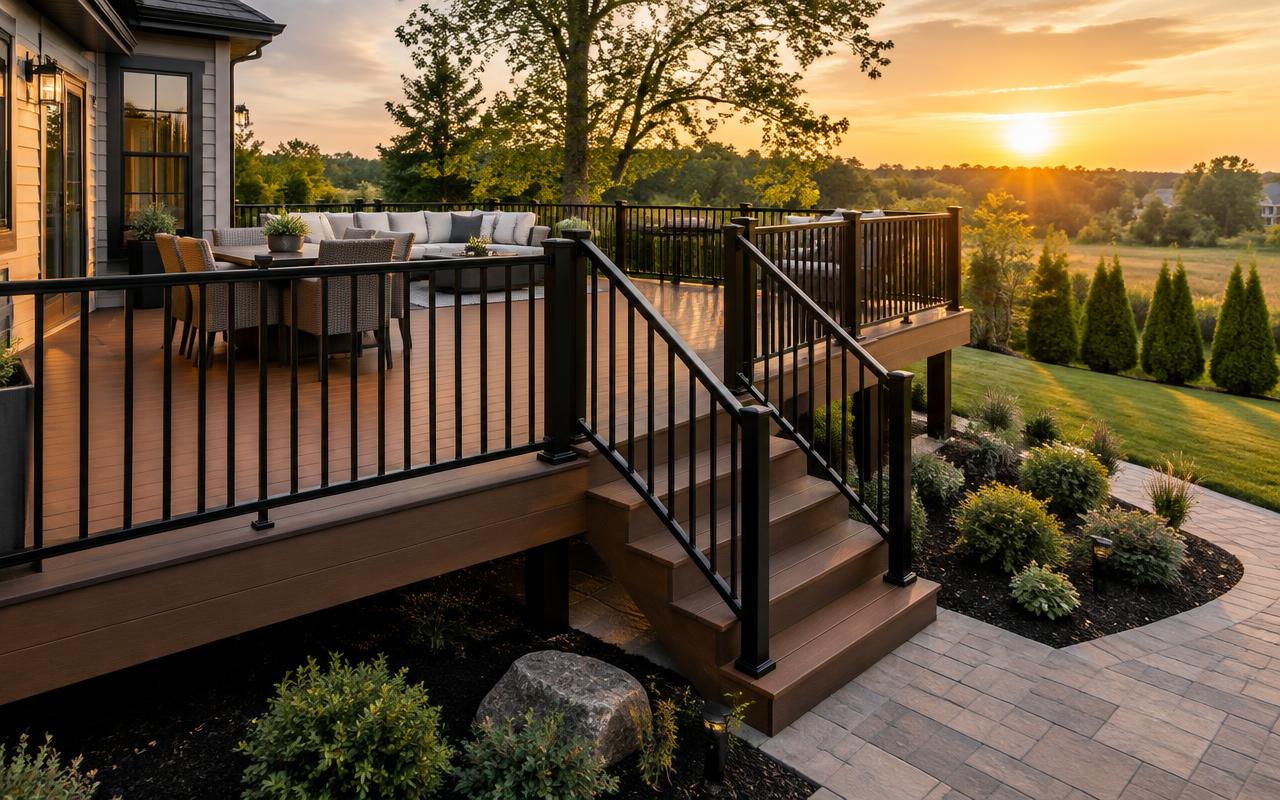
Railing is priced by the linear foot, and on many decks it rivals the decking itself as a cost driver. It is also the part of the deck you see from inside the house — so it deserves more thought than it usually gets.
The main railing choices
- Pressure-treated wood — lowest cost, matches a wood deck, needs staining
- Composite — matches composite decking, low maintenance, mid-range cost
- Aluminum — slim profiles, durable, preserves the view
- Cable — the most open view, popular on elevated and waterfront decks
- Glass — maximum visibility, highest cost, shows every fingerprint
Code sets the floor
Most jurisdictions require railing on decks more than 30 inches off the ground, with balusters spaced so a 4-inch sphere cannot pass through and a height of 36 to 42 inches. Stairs need graspable handrails. Your contractor confirms the local requirements during onsite verification — but knowing the basics helps you plan.
Count the feet honestly
Railing cost surprises usually come from linear feet. Measure every edge that needs protection: the open sides of the deck, both sides of wide stairs, and any level changes. A deck that needs railing on three sides has a very different railing budget than one tucked against the house and a railing-height garden bed.
See railing options in your quote
On the railings project page you can enter your railing length and material to see how the choice affects your estimated quote from your local participating contractor's price book.
See what your deck project would cost
Map your deck, choose your materials and options, and get one estimated quote based on your local pro’s actual pricing.
Get My Deck Quote