Homeowner guide

What drives the cost of a deck?

Two decks of the same size can differ by thousands of dollars. Here's what actually moves the number — so when you get your one real quote from the local deck pro serving your area, you know exactly what's behind it.

Factor 1

Size and layout

Square footage is the single biggest driver of deck cost — decking, framing lumber, fasteners, and labor all scale with it. A 320 sq. ft. deck costs roughly twice a 160 sq. ft. deck of the same build.

Shape matters too. A simple rectangle wastes little material and frames fast. Angles, curves, picture-frame borders, and multiple levels add cuts, blocking, and labor hours — often 10–20% more for the same square footage.
Factor 2

Decking material

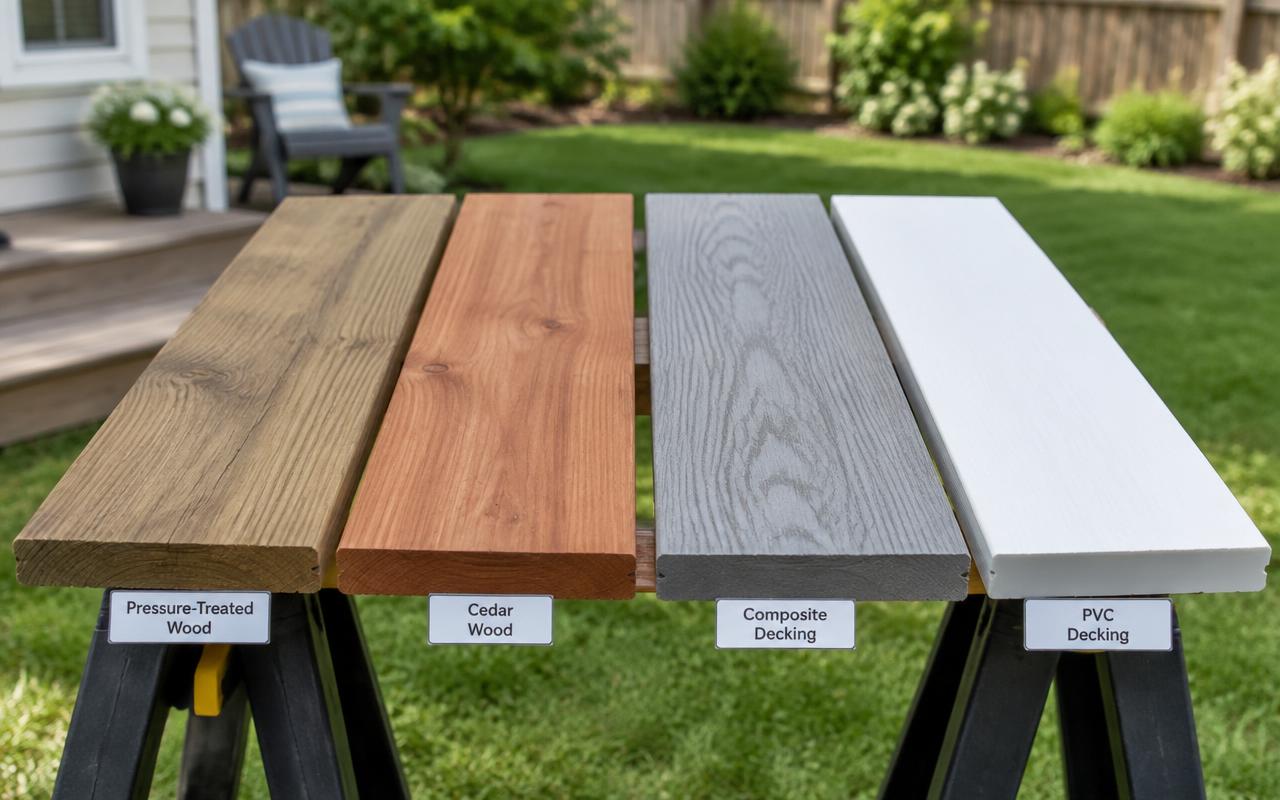
Four decking materials side by side: pressure-treated wood, cedar, composite, and PVC boards

Pressure-treated wood is the budget-friendly starting point: lowest material cost, but it needs staining or sealing every couple of years. Cedar costs more up front, resists rot naturally, and still needs regular care.

Composite and PVC decking cost significantly more per square foot installed, but they never need staining, won't splinter or rot, and carry 25–50 year warranties. Over a deck's lifetime, many homeowners find the maintenance savings close the gap.

Factor 3

Height off the ground

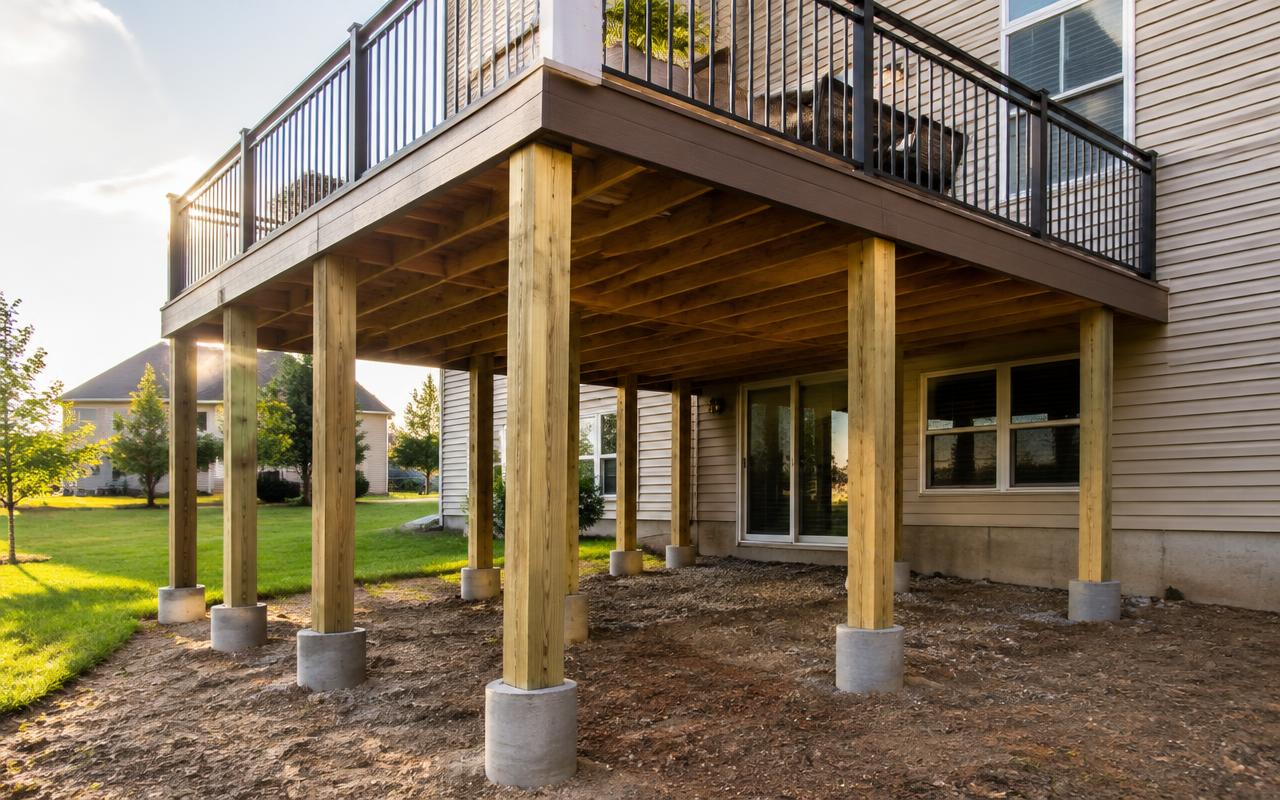
Elevated second-story deck on tall posts with concrete footings

A ground-level deck sits on simple footings and a low frame. Once a deck rises more than about 3 feet, everything gets heavier: deeper concrete footings, taller posts, bracing, and code-required railings on every open edge.

Second-story decks add scaffolding, longer material carries, and often an engineer's stamp. Access matters too — a backyard a crew can't reach with equipment or a materials delivery adds real labor hours.

Factor 4

Railing and stairs

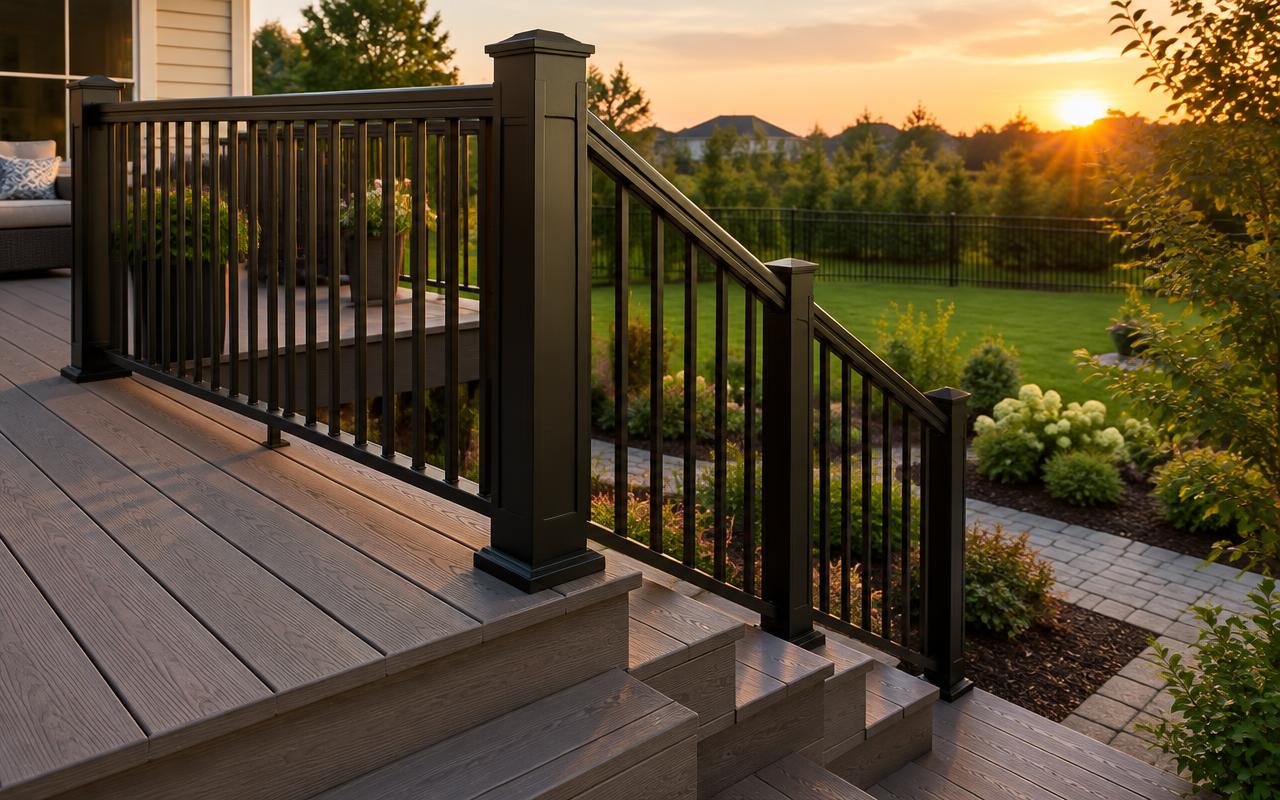
Black aluminum deck railing with a matching stair rail at sunset

Railing is priced by the linear foot, separately from the deck surface — and it's one of the biggest swing items. Pressure-treated wood railing is the most affordable; composite, aluminum, and cable railing each step up in price and durability.

Stairs are priced by the staircase and the rise. A single short stair to the yard is a minor line item; a tall flight from a second-story deck with landings and code railings can add thousands.

Factor 5

Features and finishes

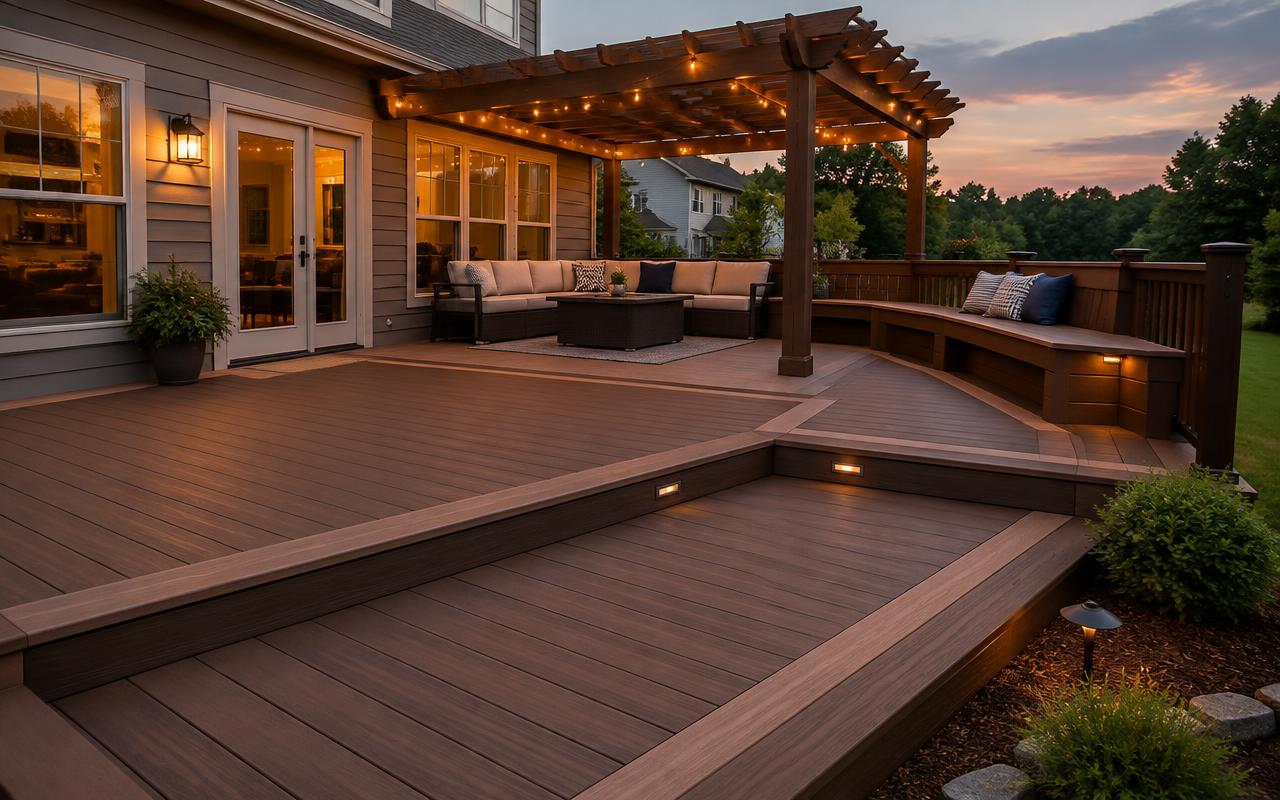
Multi-level composite deck with a pergola, built-in bench, and lighting at dusk

Built-ins turn a platform into an outdoor room — and each one is its own line item. Pergolas, built-in benches and planters, picture-frame borders, deck lighting, and skirting all add material and skilled labor.

The good news: these are exactly the choices you control. Knowing what each feature adds lets you decide where to spend and where to keep it simple.

Ready for a number you can act on?

Guides like this one explain the ranges. A DeckQuoteTM estimate gives you one real price for your project, from the actual pricing of the deck professional serving your area — and your project goes only to them.