
For homeowners · 2–3 min read
Replacing an Old Deck: What to Plan For
When replacement beats repair, what demolition involves, and how a rebuild lets you fix layout and material regrets.
October 2, 2026
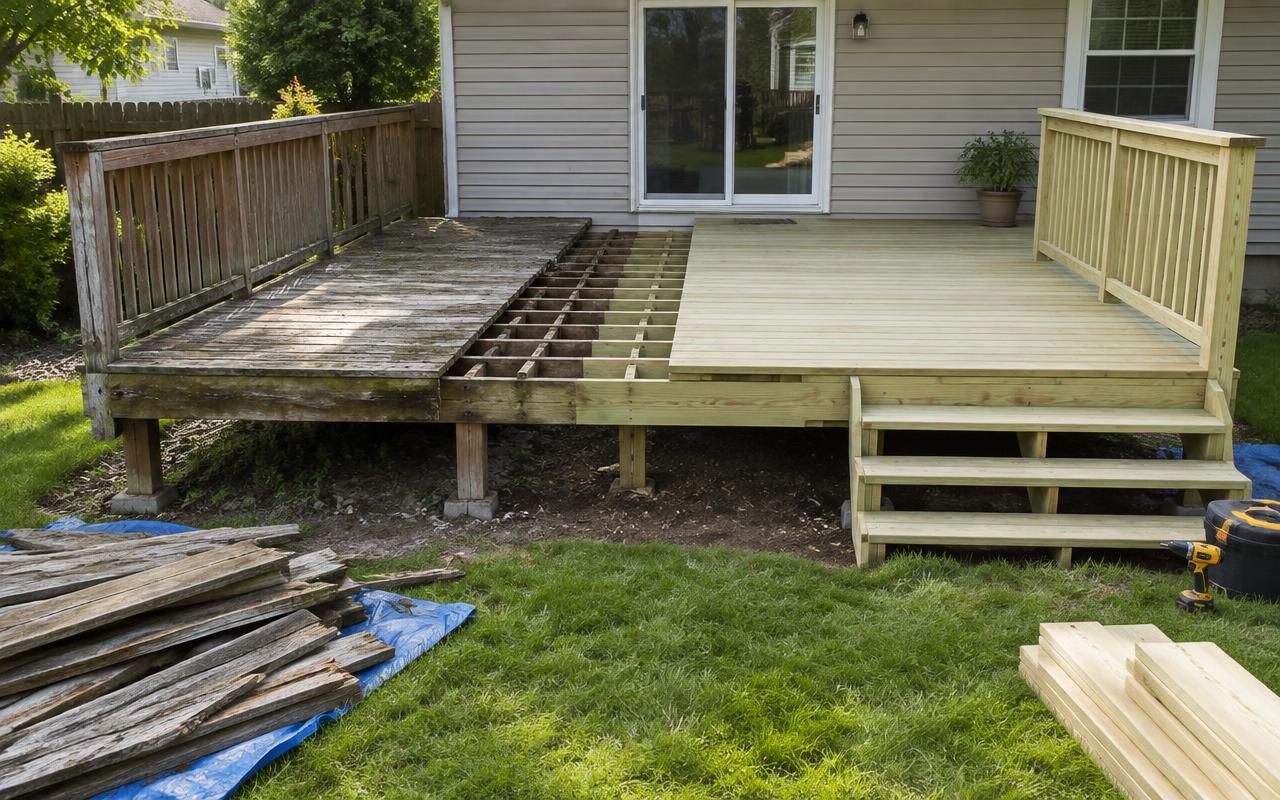
Replacement is the right call when the structure is tired, the layout no longer fits, or repair costs are climbing toward the price of new. It is also a rare second chance: every decision you made last time can be made better this time.
When replacement wins
- Rot or insect damage in posts, beams, joists, or the ledger board
- Framing that does not meet current code
- Footings that have shifted or were never deep enough
- A layout that never worked — wrong size, wrong height, wrong stairs
- Repair estimates approaching half the cost of a comparable new deck
Demolition is a real line item
Tearing out an old deck means labor, disposal, and sometimes surprises underneath — a rotted ledger, settled footings, or siding damage hidden behind the old structure. A quote that includes demolition and disposal upfront is worth more than a low number that grows on day one.
Use the rebuild to fix the regrets
Most homeowners replacing a deck change something: bigger footprint, better stair placement, lower-maintenance decking, or a railing that does not block the view. Composite or PVC surfaces are the most common upgrade, trading annual staining for an occasional wash.
Think about what annoyed you about the old deck for the last decade. That list is the design brief for the new one.
Get one number for the whole project
The deck replacement project page lets you include demolition, the new footprint, materials, railing, and stairs in a single estimated quote priced from your local participating contractor's price book. Onsite verification confirms structure, footings, and permits before the final price.
See what your deck project would cost
Map your deck, choose your materials and options, and get one estimated quote based on your local pro’s actual pricing.
Get My Deck Quote